*
the
ease with which [a] may be distorted under the action of [b]
the
ease with which [a] may be distorted under the action of [b]
28 April - 28 May, 2023
Hošek Contemporary, Berlin
Curator/Text: Linda Toivio
Photographer: Mari Vass
Wood Workshop Assistance: Doris Götz (BBK)
Technical/Logistical Assistance: Petr Hošek, Tom, Habib, Ranav, Nobu
Press:
Coeur & Art (English)
KubaParis (English)
Hošek Contemporary, Berlin
Curator/Text: Linda Toivio
Photographer: Mari Vass
Wood Workshop Assistance: Doris Götz (BBK)
Technical/Logistical Assistance: Petr Hošek, Tom, Habib, Ranav, Nobu
Press:
Coeur & Art (English)
KubaParis (English)
EN: the ease with which [a] may be shaped by [b] continues Monika Dorniak’s ongoing practice-based research and sculpture series, Aesthetics of Knowledge (2019–present). This body of work thoughtfully explores humanity’s place in the Anthropocene, addressing contemporary challenges such as alienation and solastalgia, while also highlighting the dynamic agency of a hybridised natural world. Dorniak views the series as a genuine composition in correspondence with more-than-human agencies-most notably stones and water.
For the Hošek Contemporary Prize 2023 exhibition, Dorniak has seamlessly integrated the Aesthetics of Knowledge series into the unique architecture of the ship. Working in harmony with the surrounding elements-wood and water-she has created a site-specific installation that brings together epoxy, textiles, wood, fluids, and stones, all accompanied by a newly composed soundscape. As part of this kinetic installation, Dorniak has cultivated new crystal stones in partnership with more-than-human agencies from the waters of the River Spree, forging a direct and meaningful connection to the local environment. Here, stones are considered as active agents, performing growth and transformation, allowing the work to be experienced as a blend of performance and exhibition.
Dorniak’s approach invites us to see ourselves as deeply interconnected with the world around us. Drawing on the ideas of thinkers such as Bruno Latour, she encourages us to move beyond the divide between what may be human and “non-human” and recognise the agency of non-human entities as an integral part of our existence. In this context, the stones in Dorniak’s work are not simply objects, but co-composers-active participants in the ongoing process of growth and transformation (in reference to Donna Haraway).
Through this engaging and thoughtful installation, Dorniak invites visitors to experience a unique encounter with both art and environment, blurring the boundaries between performance and exhibition, and fostering a renewed sense of connection with the more-than-human world.
DE: the ease with which [a] may be shaped by [b] setzt Monika Dorniaks fortlaufende, praxisbasierte Forschung und Skulpturenserie Aesthetics of Knowledge (2019–aktuell) fort. Dieses Werk untersucht auf sehr persönliche Weise die Stellung des Menschen im Anthropozän, indem es gegenwärtige Herausforderungen wie Entfremdung und Solastalgie thematisiert und gleichzeitig die dynamische Wirkkraft einer hybridisierten Natur hervorhebt. Dorniak versteht die Serie als eine ganzheitliche Komposition in Korrespondenz mit nicht-menschlichen Akteur*innen – insbesondere Steinen und Wasser.
Für die Ausstellung des Hošek Contemporary Prize 2023 hat Dorniak die Aesthetics of Knowledge-Serie nahtlos in die besondere Architektur des Schiffs integriert. In Korrespondenz mit den umgebenden Elementen – Holz und Wasser – arrangierte sie eine ortsspezifische Installation, die Epoxidharz, Textilien, Holz, Flüssigkeiten und Steine miteinander verbindet, begleitet von einer neu komponierten Klanglandschaft. Im Rahmen dieser kinetischen Installation züchtete Dorniak neue Kristallsteine in “Kollaboration” mit Lebewesen aus den Wassern der Spree und schuf so eine direkte, bedeutungsvolle Verbindung zur lokalen Umgebung. In dieser Ausstellung werden Steine als aktive Akteurinnen verstanden, die Wachstum und Transformation vollziehen und es ermöglichen, das Werk zugleich als artenübergreifende Performance und Ausstellung zu erleben.
Dorniaks Ansatz lädt dazu ein, uns selbst als stark verflochten mit der Welt zu begreifen. Inspiriert von Denker*innen wie Bruno Latour fordert sie dazu auf, die Grenze zwischen dem Menschlichen und dem „Nicht-Menschlichen“ zu überwinden und die Wirkkraft nicht-menschlicher Entitäten als integralen Bestandteil unserer Existenz anzuerkennen. In diesem Kontext sind die Steine in Dorniaks Arbeiten nicht einfach Objekte, sondern Ko-Komponist*innen (in Bezug auf Donna Haraway)– aktive Teilnehmende am fortwährenden Prozess von Wachstum und Veränderung.
Durch diese eindringliche und reflektierte Installation lädt Dorniak Besucher*innen zu einer besonderen Begegnung mit Kunst und Umwelt ein, die Grenzen zwischen Performance und Ausstellung verwischt und ein neues Gefühl der Korrespondenz mit der mehr-als-menschlichen Welt fördert.
For the Hošek Contemporary Prize 2023 exhibition, Dorniak has seamlessly integrated the Aesthetics of Knowledge series into the unique architecture of the ship. Working in harmony with the surrounding elements-wood and water-she has created a site-specific installation that brings together epoxy, textiles, wood, fluids, and stones, all accompanied by a newly composed soundscape. As part of this kinetic installation, Dorniak has cultivated new crystal stones in partnership with more-than-human agencies from the waters of the River Spree, forging a direct and meaningful connection to the local environment. Here, stones are considered as active agents, performing growth and transformation, allowing the work to be experienced as a blend of performance and exhibition.
Dorniak’s approach invites us to see ourselves as deeply interconnected with the world around us. Drawing on the ideas of thinkers such as Bruno Latour, she encourages us to move beyond the divide between what may be human and “non-human” and recognise the agency of non-human entities as an integral part of our existence. In this context, the stones in Dorniak’s work are not simply objects, but co-composers-active participants in the ongoing process of growth and transformation (in reference to Donna Haraway).
Through this engaging and thoughtful installation, Dorniak invites visitors to experience a unique encounter with both art and environment, blurring the boundaries between performance and exhibition, and fostering a renewed sense of connection with the more-than-human world.
DE: the ease with which [a] may be shaped by [b] setzt Monika Dorniaks fortlaufende, praxisbasierte Forschung und Skulpturenserie Aesthetics of Knowledge (2019–aktuell) fort. Dieses Werk untersucht auf sehr persönliche Weise die Stellung des Menschen im Anthropozän, indem es gegenwärtige Herausforderungen wie Entfremdung und Solastalgie thematisiert und gleichzeitig die dynamische Wirkkraft einer hybridisierten Natur hervorhebt. Dorniak versteht die Serie als eine ganzheitliche Komposition in Korrespondenz mit nicht-menschlichen Akteur*innen – insbesondere Steinen und Wasser.
Für die Ausstellung des Hošek Contemporary Prize 2023 hat Dorniak die Aesthetics of Knowledge-Serie nahtlos in die besondere Architektur des Schiffs integriert. In Korrespondenz mit den umgebenden Elementen – Holz und Wasser – arrangierte sie eine ortsspezifische Installation, die Epoxidharz, Textilien, Holz, Flüssigkeiten und Steine miteinander verbindet, begleitet von einer neu komponierten Klanglandschaft. Im Rahmen dieser kinetischen Installation züchtete Dorniak neue Kristallsteine in “Kollaboration” mit Lebewesen aus den Wassern der Spree und schuf so eine direkte, bedeutungsvolle Verbindung zur lokalen Umgebung. In dieser Ausstellung werden Steine als aktive Akteurinnen verstanden, die Wachstum und Transformation vollziehen und es ermöglichen, das Werk zugleich als artenübergreifende Performance und Ausstellung zu erleben.
Dorniaks Ansatz lädt dazu ein, uns selbst als stark verflochten mit der Welt zu begreifen. Inspiriert von Denker*innen wie Bruno Latour fordert sie dazu auf, die Grenze zwischen dem Menschlichen und dem „Nicht-Menschlichen“ zu überwinden und die Wirkkraft nicht-menschlicher Entitäten als integralen Bestandteil unserer Existenz anzuerkennen. In diesem Kontext sind die Steine in Dorniaks Arbeiten nicht einfach Objekte, sondern Ko-Komponist*innen (in Bezug auf Donna Haraway)– aktive Teilnehmende am fortwährenden Prozess von Wachstum und Veränderung.
Durch diese eindringliche und reflektierte Installation lädt Dorniak Besucher*innen zu einer besonderen Begegnung mit Kunst und Umwelt ein, die Grenzen zwischen Performance und Ausstellung verwischt und ein neues Gefühl der Korrespondenz mit der mehr-als-menschlichen Welt fördert.
 Exhibition view, Monika Gabriela Dorniak, “the ease with which [a] may be distorted under the action of [b]”, 2023, Hošek Contemporary, Berlin. Photo: Mari Vass. © VG Bild-Kunst, Bonn 2026.
 “She is growing stones”. That is what I tell people about Monika Dorniak’s new solo exhibition at Hošek Contemporary. This is more or less accurate.
As I first visit her studio, I discover paintings, sculptures and various organic elements lying around, as one might expect. In this atelier however, the most fascinating things are probably hidden in buckets and jars of various sizes. They hold stones, pieces of wood and dead leaves sitting in a mysterious liquid, sometimes for years. Now and then, when she remembers, Dorniak lifts one of the lids, never knowing what to expect, checking if something might seem ready for an audience. Being a complete novice regarding the breeding of crystal stones, at first glance I suspect that I am looking at colourful mould growths or intricate, rare types of fungi. (They are indeed stones.)
the ease with which [a] may be distorted under the action of [b] continues Dorniak’s sculpture series ‘Aesthetics of Knowledge’ (2019-ongoing) and practice-based research, which engage with humanity's position in the Anthropocene. She perceives the sculptures as a collaboration with more-than-human agencies, in particular stones and water. Such elements are also relevant in the current exhibition, as the interplay and reactiveness between stones, wood and water portray the agency of a hybridised nature.
More-than-human agents or non-humans include not only flora and fauna, but all creatures, microorganisms and elements which co-exist amongst each other on Earth. Human life would not exist without them, as everything is thoroughly interconnected and interdependent. Moreover, opposing the Euro-Western concept of culture-nature dualism, humanity cannot be separated from the natural world. Bruno Latour, French philosopher, anthropologist and sociologist, argues that we must break free from this dichotomy, but also the dominant modes of classification, which define the subject-object hierarchy. He advocates for the autonomy of those one might consider as objects or other-than-human, as well as their equal agency with humans.
Following Latour’s criticism and questioning of human exceptionalism, the stones in Dorniak’s work are not seen as objects, but as agencies that perform growth and transformation. The stones are not translated by humans, but they are actors in their own right. The body of work can thus be interpreted as a hybrid between a performance and an exhibition. Her multi-sensorial work fuses epoxy, textile, wood, fluids and stones with a new auditive score. Some of the crystal stones in the kinetic installations have been bred in alliance with the waters of the Spree, thus forming a direct link to the surroundings. Addressing symptoms specific to this era, such as alienation and solastalgia, the site-specific installation is a balance of alchemic processes and carpentry, evoking both science and imagination. A key component within the exhibition, the afore mentioned liquid triggers crystal growth on particular surfaces, through a mixture of minerals, pigments and other components developed by the artist through experimenting.
While the dripping mechanism slowly releases the red solution, the hanging piece of spruce is steadily soaked, bearing a resemblance to driftwood collected by the artist. It is also serving as a refuge for a stone, snuggly nesting within its core. Laid directly on the ship’s original floorboards, the sculpture underneath is collecting the dripping liquid, its stone inhabitant partially submerged like a small island. Another dripping mechanism is hung above the centrepiece, a sturdy wooden structure painted in striking red, framing an installation of stones and crystals. The crimson fluid has animportant function, as it awakens an otherwise arid landscape of dehydrated stonegrowth. A mirror is placed below the installation, allowing the viewers to observe the activation and developments at the bottom of the frame.
Playfully appearing at the back, a beastly character is perceived on the textile banner, similar to a theatrical backdrop. It is not a single creature or entity, but represents the interconnectedness with all other entities as well as the construction ofidentity and the animal-self. Gently encapsulating the entire exhibition, the sound work is a composition of the artist’s voice, crystalline growth and the movement of more-than-human agencies. The score, written by Dorniak, can be heard in a loop throughout the space, recited by the artist herself:
“…we live, as we dream, alone, alone, entangled in a construction of a divine braid of associations.”
* Text by Linda Toivio
As I first visit her studio, I discover paintings, sculptures and various organic elements lying around, as one might expect. In this atelier however, the most fascinating things are probably hidden in buckets and jars of various sizes. They hold stones, pieces of wood and dead leaves sitting in a mysterious liquid, sometimes for years. Now and then, when she remembers, Dorniak lifts one of the lids, never knowing what to expect, checking if something might seem ready for an audience. Being a complete novice regarding the breeding of crystal stones, at first glance I suspect that I am looking at colourful mould growths or intricate, rare types of fungi. (They are indeed stones.)
the ease with which [a] may be distorted under the action of [b] continues Dorniak’s sculpture series ‘Aesthetics of Knowledge’ (2019-ongoing) and practice-based research, which engage with humanity's position in the Anthropocene. She perceives the sculptures as a collaboration with more-than-human agencies, in particular stones and water. Such elements are also relevant in the current exhibition, as the interplay and reactiveness between stones, wood and water portray the agency of a hybridised nature.
More-than-human agents or non-humans include not only flora and fauna, but all creatures, microorganisms and elements which co-exist amongst each other on Earth. Human life would not exist without them, as everything is thoroughly interconnected and interdependent. Moreover, opposing the Euro-Western concept of culture-nature dualism, humanity cannot be separated from the natural world. Bruno Latour, French philosopher, anthropologist and sociologist, argues that we must break free from this dichotomy, but also the dominant modes of classification, which define the subject-object hierarchy. He advocates for the autonomy of those one might consider as objects or other-than-human, as well as their equal agency with humans.
Following Latour’s criticism and questioning of human exceptionalism, the stones in Dorniak’s work are not seen as objects, but as agencies that perform growth and transformation. The stones are not translated by humans, but they are actors in their own right. The body of work can thus be interpreted as a hybrid between a performance and an exhibition. Her multi-sensorial work fuses epoxy, textile, wood, fluids and stones with a new auditive score. Some of the crystal stones in the kinetic installations have been bred in alliance with the waters of the Spree, thus forming a direct link to the surroundings. Addressing symptoms specific to this era, such as alienation and solastalgia, the site-specific installation is a balance of alchemic processes and carpentry, evoking both science and imagination. A key component within the exhibition, the afore mentioned liquid triggers crystal growth on particular surfaces, through a mixture of minerals, pigments and other components developed by the artist through experimenting.
While the dripping mechanism slowly releases the red solution, the hanging piece of spruce is steadily soaked, bearing a resemblance to driftwood collected by the artist. It is also serving as a refuge for a stone, snuggly nesting within its core. Laid directly on the ship’s original floorboards, the sculpture underneath is collecting the dripping liquid, its stone inhabitant partially submerged like a small island. Another dripping mechanism is hung above the centrepiece, a sturdy wooden structure painted in striking red, framing an installation of stones and crystals. The crimson fluid has animportant function, as it awakens an otherwise arid landscape of dehydrated stonegrowth. A mirror is placed below the installation, allowing the viewers to observe the activation and developments at the bottom of the frame.
Playfully appearing at the back, a beastly character is perceived on the textile banner, similar to a theatrical backdrop. It is not a single creature or entity, but represents the interconnectedness with all other entities as well as the construction ofidentity and the animal-self. Gently encapsulating the entire exhibition, the sound work is a composition of the artist’s voice, crystalline growth and the movement of more-than-human agencies. The score, written by Dorniak, can be heard in a loop throughout the space, recited by the artist herself:
“…we live, as we dream, alone, alone, entangled in a construction of a divine braid of associations.”
* Text by Linda Toivio

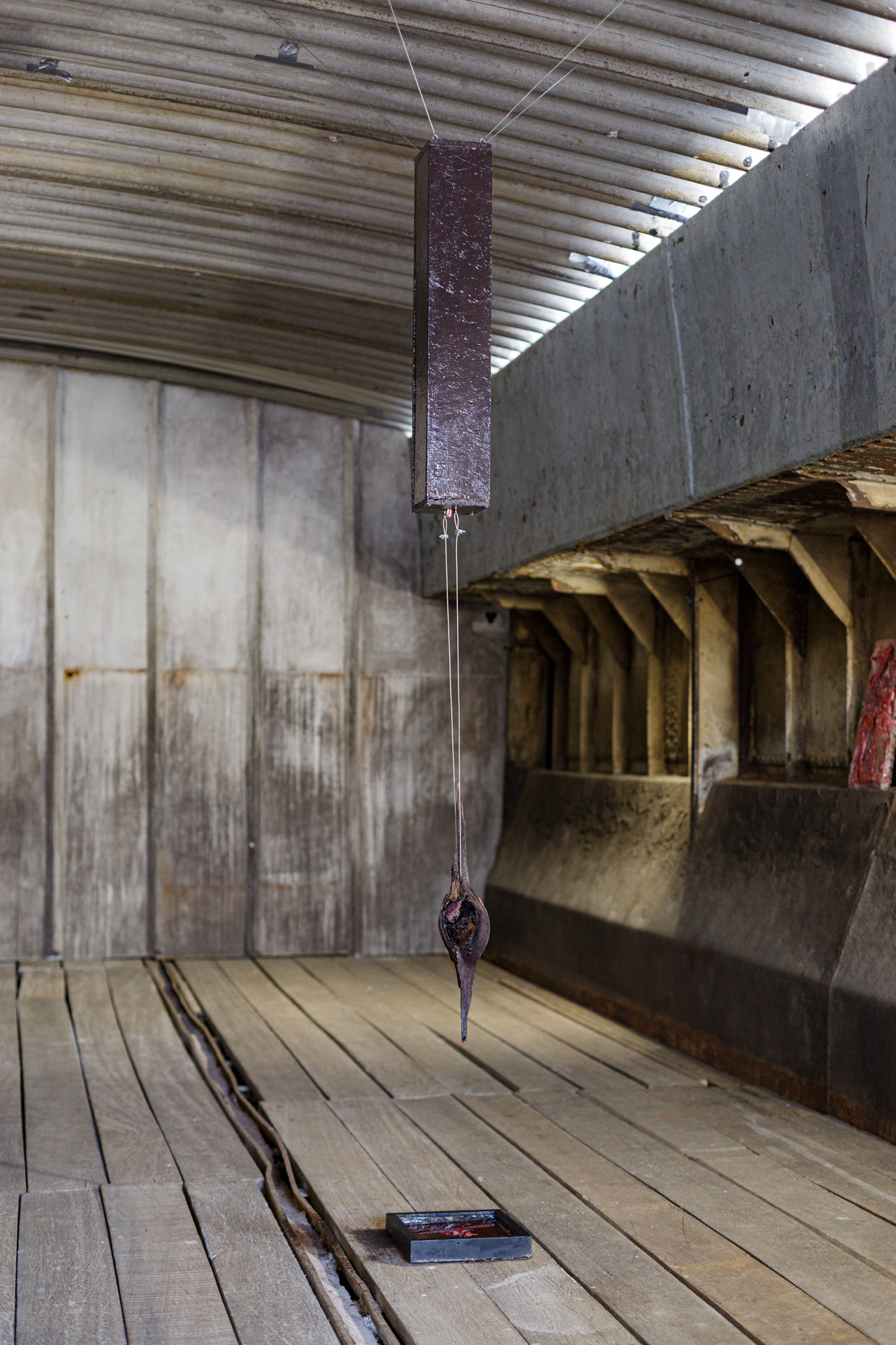


Image 2-5: Exhibition view, Monika Gabriela Dorniak, “the ease with which [a] may be distorted under the action of [b]”, 2023, Hošek Contemporary, Berlin. Photo: Mari Vass. © VG Bild-Kunst, Bonn 2026.
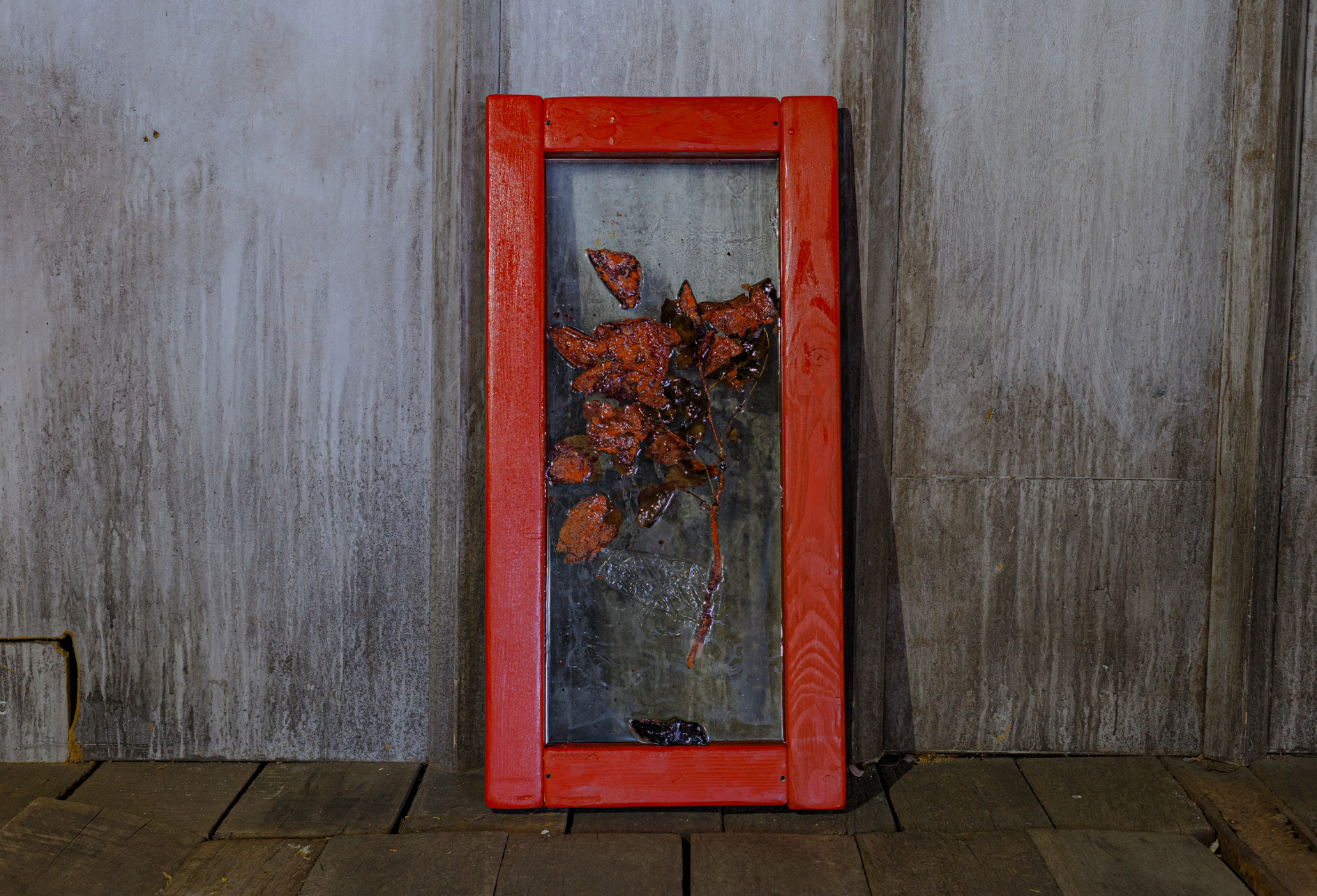
Image 6: Exhibition view, Monika Gabriela Dorniak, “the ease with which [a] may be distorted under the action of [b]”, 2023, Hošek Contemporary, Berlin. Photo: Mari Vass. © VG Bild-Kunst, Bonn 2026.