*
Pikaia’s Ossature (2022)
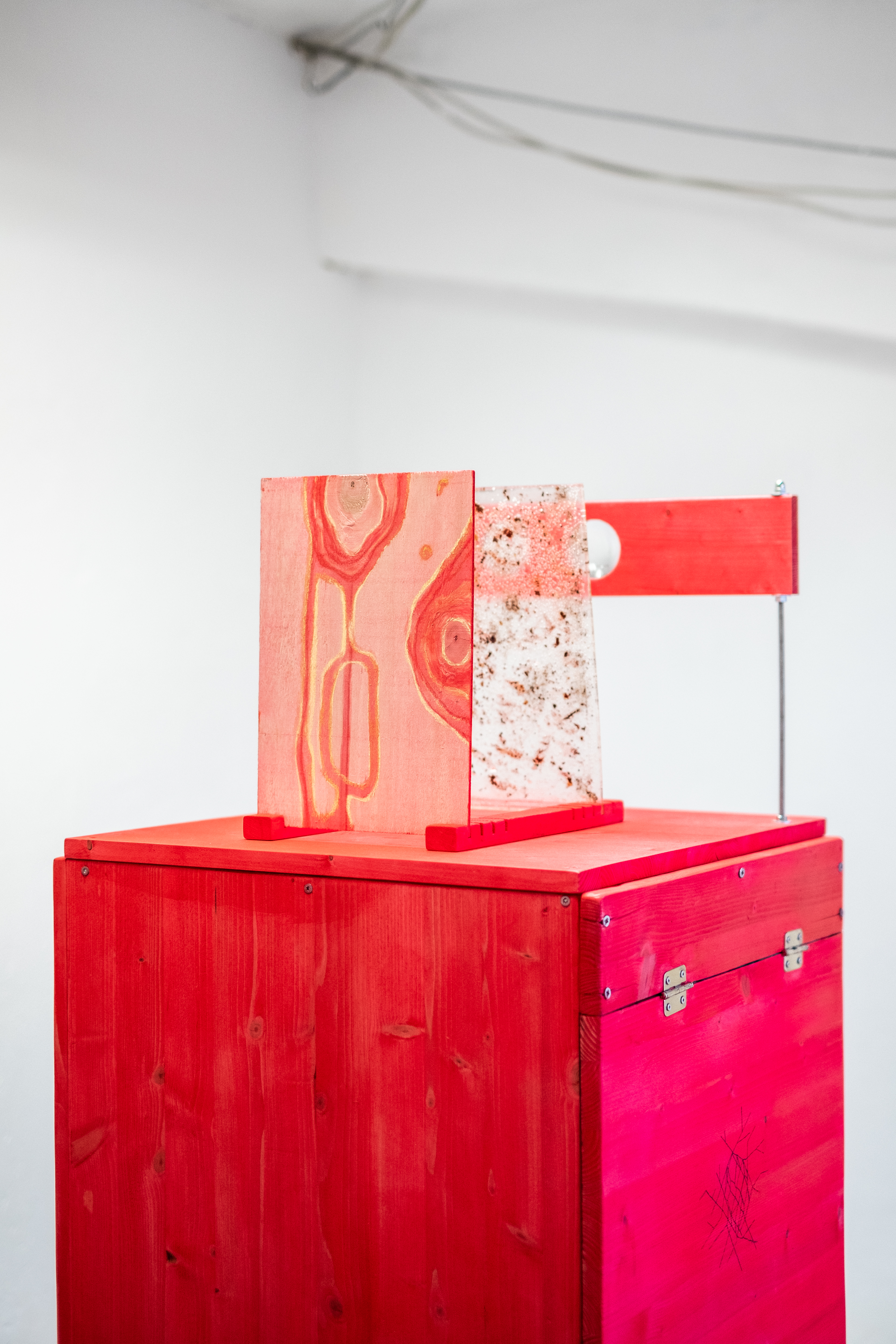

Image 1-2: Monika Gabriela Dorniak, “Pikaia’s Ossature”, 2022, wood, pastel, epoxy, mirror, glass, stones, ethanol. Photo: Anna Perepechai. © VG Bild-Kunst, Bonn 2026.

Image 3: Monika Gabriela Dorniak, “Pikaia’s Ossature”, 2022, wood, pastel, epoxy, mirror, glass, stones, ethanol. Photo: Anna Perepechai. © VG Bild-Kunst, Bonn 2026.
EN: Which circumstances define an object’s year of origin when its anatomy and spirit are composed of an assemblage that merges past, present, and future states—an entity that has always been, and may always remain, in a state of becoming?
The main protagonist of the sculptural assemblage Pikaia’s Ossature (2022–ongoing) is a crystalline stone, from the Aesthetics of Knowledge series, that acts as the artist’s co-composer. It resides within a skeleton made of wood, glass, and metal, which serves as a porous framework for the growth of a hybrid organism uniting more-than-human and human particles (*).
The sculpture is inspired by the peep box—one of the earliest forms of mass media in Western history—which the artist researched extensively in the archives of the Deutsches Optisches Museum in Jena as part of the künstlerische Tatsachen residency . The peep box circulated images of “the world” and gained popularity in the 17th and 18th centuries. Reflecting critically on the monopolistic aesthetics that such media began to reproduce, Pikaia’s Ossature seeks a balance in which the dominant position of the human being in the world is shared with its more-than-human agents that co-define its presence.
* The hybrid state of more-than-human and human agencies is considered here not as a modern invention but as an original condition—one that has been neglected through the dualistic, binary divisions established by the Western worldview. Paying homage to “the agency of nature,” this approach also refers to French philosopher Bruno Latour, one of its most prominent advocates.
This project was supported by Künstlerische Tatsachen residency and Deutsches Optisches Museum in Jena.
The main protagonist of the sculptural assemblage Pikaia’s Ossature (2022–ongoing) is a crystalline stone, from the Aesthetics of Knowledge series, that acts as the artist’s co-composer. It resides within a skeleton made of wood, glass, and metal, which serves as a porous framework for the growth of a hybrid organism uniting more-than-human and human particles (*).
The sculpture is inspired by the peep box—one of the earliest forms of mass media in Western history—which the artist researched extensively in the archives of the Deutsches Optisches Museum in Jena as part of the künstlerische Tatsachen residency . The peep box circulated images of “the world” and gained popularity in the 17th and 18th centuries. Reflecting critically on the monopolistic aesthetics that such media began to reproduce, Pikaia’s Ossature seeks a balance in which the dominant position of the human being in the world is shared with its more-than-human agents that co-define its presence.
* The hybrid state of more-than-human and human agencies is considered here not as a modern invention but as an original condition—one that has been neglected through the dualistic, binary divisions established by the Western worldview. Paying homage to “the agency of nature,” this approach also refers to French philosopher Bruno Latour, one of its most prominent advocates.
This project was supported by Künstlerische Tatsachen residency and Deutsches Optisches Museum in Jena.
DE: Welche Umstände formulieren das Entstehungsjahr eines Objekts, wenn seine Anatomie und sein Geist aus einem Gefüge bestehen, das Vergangenheit, Gegenwart und Zukunft miteinander verschmelzen lässt – ein Wesen, das immer schon im Werden war und vielleicht immer im Werden bleiben wird?
Die Hauptprotagonistin der skulpturalen Assemblage Pikaia’s Ossature (2022–laufend) ist ein kristalliner Stein, aus der Aesthetics of Knowledge Serie, der als Ko-komponist der Künstlerin agiert. Er befindet sich in einem Skelett aus Holz, Glas und Metall, das als poröses Gerüst für das Wachstum eines hybriden Organismus dient, in dem mehr-als-menschliche und menschliche Partikel miteinander verbunden sind (*²).
Die Skulptur ist inspiriert vom Guckkasten – einem der ersten Massenmedien der westlichen Geschichte –, den die Künstlerin während ihrer Recherchen im Archiv des Deutschen Optischen Museums in Jena intensiv studierte. Der Guckkasten verbreitete im 17. und 18. Jahrhundert Bilder der „Welt“ und gewann damals große Popularität. In kritischer Auseinandersetzung mit der monopolistischen Ästhetik, die durch solche Medien reproduziert wurde, sucht Pikaia’s Ossature nach einem Gleichgewicht, in dem die zentrale Position des Menschen in der Welt mit den mehr-als-menschlichen Akteur*innen geteilt wird, die seine Existenz mitbestimmen.
* Der hybride Zustand von mehr-als-menschlichen und menschlichen Akteur*innen wird hier nicht als moderne, sondern als ursprüngliche Form verstanden, die im Zuge der dualistischen und binären Trennungen der westlichen Welt vernachlässigt wurde. In Anerkennung der „Handlungsfähigkeit der Natur“ würdigt dieser Ansatz Bruno Latour, einem ihrer bedeutendsten Vertreter.
Das Projekt wurde unterstützt von der Künstlerische Tatsachen Residenz und dem Deutschen Optischen Museum in Jena.

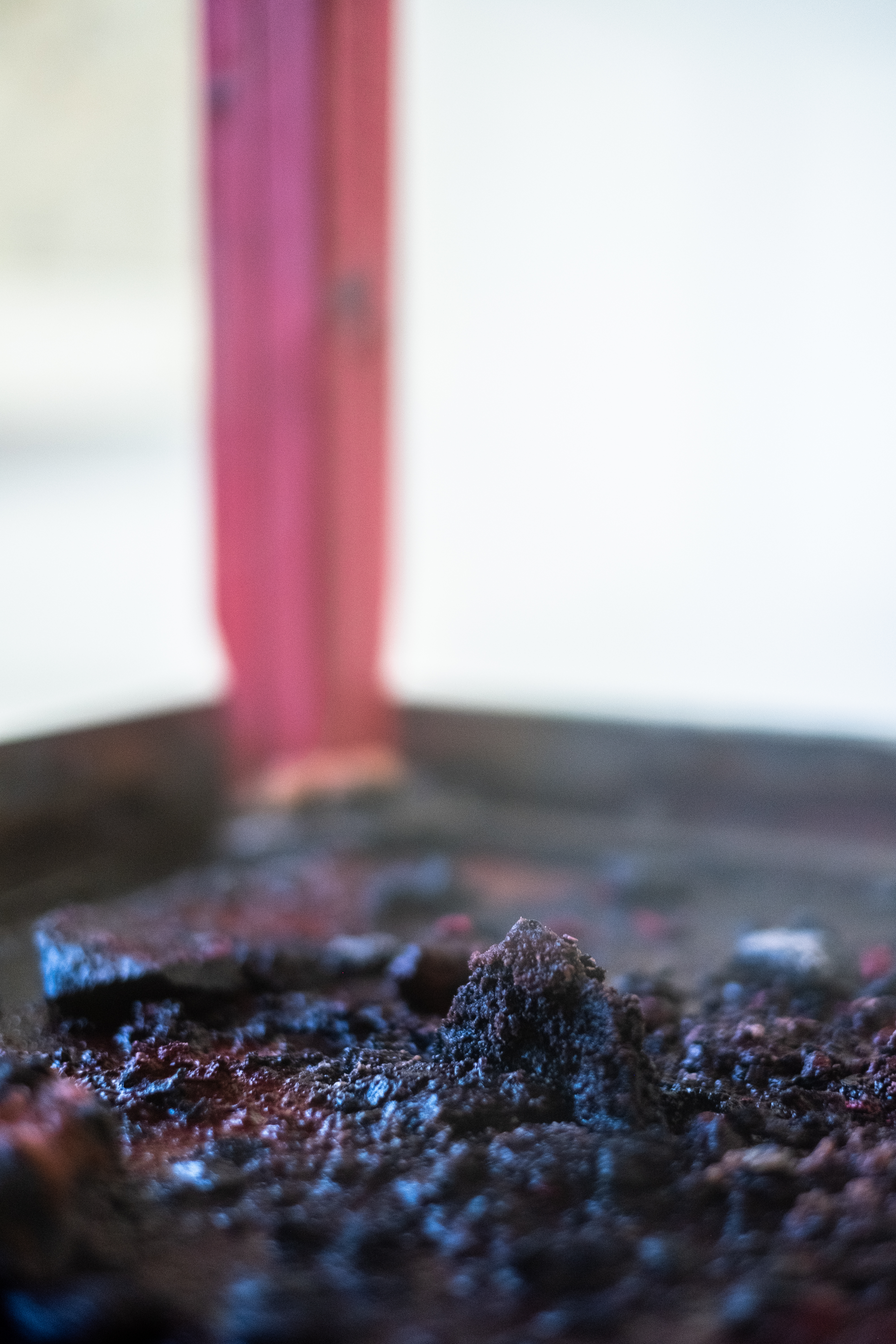
Image 4-6: Monika Gabriela Dorniak, “Pikaia’s Ossature”, 2022, wood, pastel, epoxy, mirror, glass, stones, ethanol. Photo: Anna Perepechai. © VG Bild-Kunst, Bonn 2026.